Pet Food Labels for a Vet Visit: Photos, Intake and Questions
Bring the current food’s identity and label, the amounts actually offered, known extras and the relevant timeline. Add one clear question and existing instructions. If the pet is sick, seek care promptly; do not wait for a complete feeding journal.
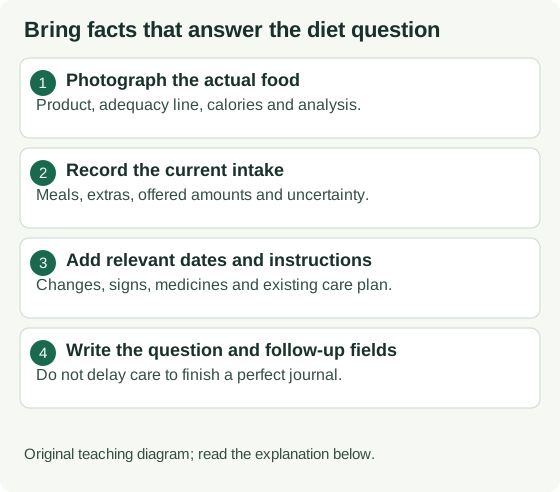
Bring the packet when the question depends on the actual diet
Use a label packet for a planned discussion about food choice, current amounts, a prescribed diet, appetite or weight changes, or a concern about a product. The veterinary team can use the exact food and intake information more effectively than a description such as “a premium brand” or “one normal scoop.”
If the pet is sick, seek veterinary care and advice promptly. AAFCO specifically advises veterinary care for a sick pet before other actions. Do not wait to collect a complete journal or every label photograph. The packet should support care, not become a condition for obtaining it.
Photograph the fields for the product actually being fed
| Field | What to keep visible | Why it helps |
|---|---|---|
| Product identity | Exact name, recipe, species, brand and container size | Distinguishes this food from other products in the same range. |
| Nutritional adequacy | Full statement, life stage and any qualification | Shows the nutritional role and claimed context. |
| Calorie Content | kcal/kg, familiar unit and stated serving definition | Connects measured intake with the matching energy information. |
| Guaranteed analysis and ingredients | Readable rows, qualifiers and full list | Preserves the actual package information requested for the question. |
| Product-concern identifiers | Lot, UPC and printed date wording where relevant | Supports identification of the actual package. |
Use readable images of the current package instead of an old retailer screenshot. If another food, treat, supplement or topper is part of the routine, identify it too. Keep original packaging where practical, especially for a product concern.
Record what is currently offered and what is known to be eaten
For each food, note the amount and unit, meal timing and who feeds. A gram amount is more specific than a scoop description when it is actually measured. For cups or cans, retain the applicable serving definition and container size. Include treats, chews, table food, toppers and supplements with their actual quantities or the information still missing.
Separate amounts offered from known intake. If the pet shares bowls, leaves mixed food, spills food or receives unrecorded extras, describe that uncertainty. Do not call an offered calorie total the exact amount eaten. A partial, accurate record is more useful than invented completeness.
Add the relevant timeline without claiming the cause
Write when a food or amount changed, when signs were first noticed, what happened next and any existing veterinary instructions. Include medication or supplement information relevant to the discussion, copied accurately from the current plan. Do not alter a medicine or diet instruction to make the record simpler.
An original example: a household changes food on Monday and notices loose stool on Tuesday. The useful note preserves both events, the products and amounts, other changes and the veterinary question. Their order does not prove that the new food caused the sign. The veterinarian needs the facts and clinical context rather than a diagnosis inferred from timing.
Choose questions that lead to an actionable plan
- Which exact food and nutritional role fit the current goal and condition?
- What amount and unit should we use, and are treats or toppers included?
- If a change is appropriate, what transition instructions apply?
- What should we monitor, when should we report back and which changes need contact sooner?
- For a prescribed diet, which additions or substitutions should we check before using?
Write the answers, units and follow-up timing provided for this pet. If an instruction is unclear, ask for clarification before translating it into a household meal note. The purpose is an agreed individual plan, not a product choice made from the general guide.
Handle a product concern as its own task
FDA lists problems such as foul odor, a swollen or leaking container, a foreign object or a pet becoming sick after eating a product. If a pet has a health problem related to pet food, FDA advises stopping that product and calling your veterinarian. Retain the product identity, lot, date wording and relevant storage or access facts where practical.
Do not keep feeding a suspect product for several meals to see whether a log clarifies the issue. Keep suspect contents inaccessible while preserving useful identifiers. Official or manufacturer product-reporting steps and veterinary care address different parts of the concern; a label packet cannot diagnose or clear the food.
Keep the final packet concise
One page can identify the reason for the visit, current products and amounts, extras, relevant timeline, existing instructions and the specific question. Attach the readable label images separately. Mark unknown quantities honestly and ask the clinic what further information is useful.
For a planned routine consultation, recording ordinary feeding beforehand may help. There is no universal requirement in this guide to wait seven days. When the situation needs care sooner, take the known facts and obtain advice without delaying for a perfect record.
Save a usable record
Download the plain-text record, or copy the fields below. Keep unknown facts marked unknown.
PET-FOOD VETERINARY VISIT PACKET
Pet / reason for discussion:
Exact current foods and attached readable label photos:
Food amounts, units, meal times and who feeds:
Treats, chews, toppers, supplements and table food:
Food offered versus known intake / missing quantities:
Recent food or amount changes with dates:
Relevant signs and timeline:
Existing medication, diet and care instructions:
Product lot, date and storage facts if concern-related:
Main question:
Veterinary answer: exact product / amount / unit / extras:
Monitoring and follow-up instructions:
Check your understanding
Do I need seven complete days of notes before asking about a sick pet?
No. Obtain veterinary care and advice promptly. Bring the facts already known and ask what additional information is useful; collecting the packet must not delay care.
Why is a brand name alone an incomplete diet record?
The brand may sell different species, recipes, stages, sizes and clinical products. Identify the exact current food and its actual label information.
Food changed before a symptom appeared. Does the record prove causation?
The chronology is useful, but it does not establish the cause. Preserve other changes and relevant facts, and let the veterinary team assess the clinical context.
What if nobody can quantify shared treats?
Record the product, shared-feeding situation and missing quantity. Do not turn an incomplete total into exact intake. Ask the veterinary team which record would help the plan.
Sources and scope
- AAFCO: Calories
- AAFCO: Reading Labels
- AAFCO: Frequently Asked Questions
- FDA: Proper Storage of Pet Food and Treats
These sources explain US dog and cat labels and pet-food handling. The examples, diagrams and worksheets are teaching material rather than measurements of real products. Follow the actual product’s instructions and your veterinary plan where one applies.